

Hero image: Occupational exposures and shift-work demands can justify a more complete health conversation. This visual supports the article’s caution that exposure awareness is not the same as proving infertility, and that reproductive-health review should start with a baseline interpreted in context.
When “just getting older on the job” deserves a closer look
First responders are trained to focus on the immediate threat: the fire, the scene, the patient, the call, or the next operational decision.
The long-term effects of the work are easier to overlook.
Heat exposure, smoke and combustion byproducts, workplace chemicals, shift work, disrupted sleep, and chronic stress can all merit a professional health discussion. These factors are relevant to reproductive health, hormone balance, metabolic function, thyroid signaling, body composition, and recovery.
They are not proof that the job causes infertility.
Reproductive health is multifactorial. Age, medical history, genetics, medications, nutrition, body composition, sleep, stress, environmental exposures, and partner-related factors may all contribute. A responsible evaluation does not reduce fertility to one job, one hormone, or one laboratory result.
It starts with context.
A baseline gives you a documented starting point. It helps you and a qualified clinician identify which questions deserve attention now and which findings should be monitored over time.
The 24-hour debt and the Normal Trap
Many firefighters, police officers, corrections professionals, SWAT operators, EMS personnel, and military members work under a form of 24-hour debt.
The debt is not only missed sleep. It can include:
- Rotating schedules that disrupt circadian timing
- Repeated overnight calls and interrupted recovery
- Elevated alertness after traumatic or high-risk events
- Heat and physical exertion during operations
- Contact with smoke, combustion byproducts, solvents, or other chemicals
- Limited time for preventive care
- Reliance on caffeine or stimulants to remain operational
A department physical may confirm that you are cleared for duty. That is important, but it is not the same as a complete health optimization review.
This is the Normal Trap: a result may fall within a broad reference range while your sleep, recovery, energy, libido, menstrual cycle, body composition, or reproductive goals are changing.
“Normal” is a population reference. It is not always a complete explanation of how your body is performing under your occupational demands.
Why a baseline matters
At Body Symmetry MD Boston, working in synergy with Beyond The Call Health & Wellness, the goal is to create a more complete conversation for first responders and other high-performance individuals.
A clinically guided baseline may include laboratory biomarkers, vital signs, body-composition measurements, health history, symptoms, medications, sleep patterns, and occupational exposures. Depending on the person and the clinical question, the review may include:
- Reproductive and sex-hormone signals
- Thyroid-related markers
- Metabolic health and glucose regulation
- Lipids and cardiovascular risk indicators
- Inflammatory and recovery-related signals
- Body composition and weight trends
- Sleep, stress, and shift-work history
The clinic’s 50+ Marker Audit is designed as a broader framework than a limited three-marker review. It is not a fertility test, and it does not diagnose infertility. Biomarkers and biometrics organize the conversation; they do not predict the future with certainty.
The value is in connecting the findings to your history and goals.

Baseline testing image: This section focuses on laboratory context, biomarker review, and a broader clinical baseline. The visual is meant to reinforce that biomarkers help structure discussion and monitoring, not provide a stand-alone fertility diagnosis.
Research snapshot: what the evidence shows
The available research supports professional discussion, not alarmist conclusions. Much of the evidence is observational, cross-sectional, exploratory, or based on self-reported information.
Firefighters: occupational chemicals and semen measures
An exploratory firefighter study involving 774 survey participants reported that occupational chemicals were detected in biological samples. The study also found that semen measures in the small biosample group often fell below World Health Organization reference values.
The findings are important, but they require careful interpretation:
- The study was observational and exploratory.
- Only a small subset provided semen samples.
- The study did not establish that firefighting caused changes in semen quality.
- The authors called for additional research.
The paper is available through PubMed Central and is listed as a 2023 publication reporting research conducted over several years. It is commonly discussed in the context of 2022 firefighter reproductive-health evidence.
Female firefighters: AMH and ovarian reserve
A 2022 cross-sectional study compared female firefighters with non-firefighter participants. Mean anti-Müllerian hormone, or AMH, was 2.93 ng/mL among firefighters compared with 4.37 ng/mL among non-firefighters.
AMH is commonly used as a marker related to ovarian reserve. However, AMH is not a complete fertility test. It does not by itself measure egg quality, confirm the ability to conceive, or guarantee pregnancy outcomes.
The study found lower AMH levels among the firefighter group but did not establish the cause. Years of firefighting were not associated with a further decrease in AMH in that analysis. More research is needed to understand the possible mechanisms and the clinical meaning for individual firefighters.
Read the PubMed abstract for PMID 35627519.
Female law-enforcement officers: stress and shift work
A 2023 study of 162 female law-enforcement officers reported that 59.1% reported stress exposure and 59.8% reported shift work. The study also examined pregnancy outcomes.
These figures describe reported occupational experiences within that sample. They do not prove that stress or shift work caused infertility, miscarriage, preterm birth, or another individual outcome. Self-reported occupational data can be affected by recall, selection, and other factors.
The findings support a practical conclusion: reproductive-health education and individualized professional counseling may be appropriate for officers who are planning pregnancy, experiencing symptoms, or concerned about their occupational exposures.
See the PubMed record for PMID 37830684.
What a baseline can and cannot tell you
A baseline can help establish:
- Where your current hormone, metabolic, thyroid, and body-composition signals stand
- Which symptoms may deserve follow-up
- Whether a result should be repeated or monitored
- What information to bring to a fertility specialist, primary-care clinician, endocrinologist, or gynecologist
- Whether changes over time are worth investigating
A baseline cannot:
- Diagnose infertility
- Determine the cause of a reproductive problem by itself
- Guarantee conception, pregnancy, or treatment outcomes
- Prove that an occupational exposure caused a medical condition
- Replace reproductive endocrinology or fertility care when that care is indicated
For patients who are actively trying to conceive, timing matters. A clinician may recommend additional evaluation based on age, symptoms, reproductive history, semen findings, menstrual patterns, pregnancy history, or other factors.
Genetic testing should be individualized
Genetic testing is not automatically required for every first responder.
For men, it may be considered in situations such as azoospermia or severe oligozoospermia, depending on the clinical evaluation and applicable guidelines.
For women, genetic evaluation may be considered in circumstances such as:
- Recurrent pregnancy loss
- Known carrier status
- A relevant personal or family history
- A planned preimplantation genetic testing pathway
- Other findings identified during a reproductive evaluation
Broad genetic panels are not routine screening for every firefighter, police officer, or other first responder. Testing can create information that requires careful interpretation, including uncertain findings or results that affect family members.
Decisions should be made with qualified clinicians and, when appropriate, a genetic counselor. The right test depends on the question being asked.

Research and genetic-testing context image: This visual ties to the article’s caution that observational research can inform discussion without proving cause, and that genetic testing should be individualized based on the clinical question.

A better next step for first responders
If you are a first responder in Massachusetts, Florida, Texas, New York, or another licensed service area, you do not need to wait for a crisis before reviewing your health data.
Beyond The Call Health & Wellness and Body Symmetry MD work together to provide comprehensive wellness support for first responders and other high-performance individuals. That partnership connects the occupational realities of tactical service with medical wellness services such as hormone optimization, medical weight loss, thyroid support, body-composition review, and individualized clinical planning.
The Body Symmetry MD Boston wellness center is located at:
340 Maple Street, Suite 205
Marlborough, MA 01752
Care is provided through the secure 14-state telehealth network, where clinically appropriate and within the licensed network:
Colorado, Florida, Georgia, Louisiana, Massachusetts, Maryland, North Carolina, Ohio, Tennessee, Texas, Virginia, New York, Pennsylvania, and Washington, D.C.
Start with your baseline and review it in context.
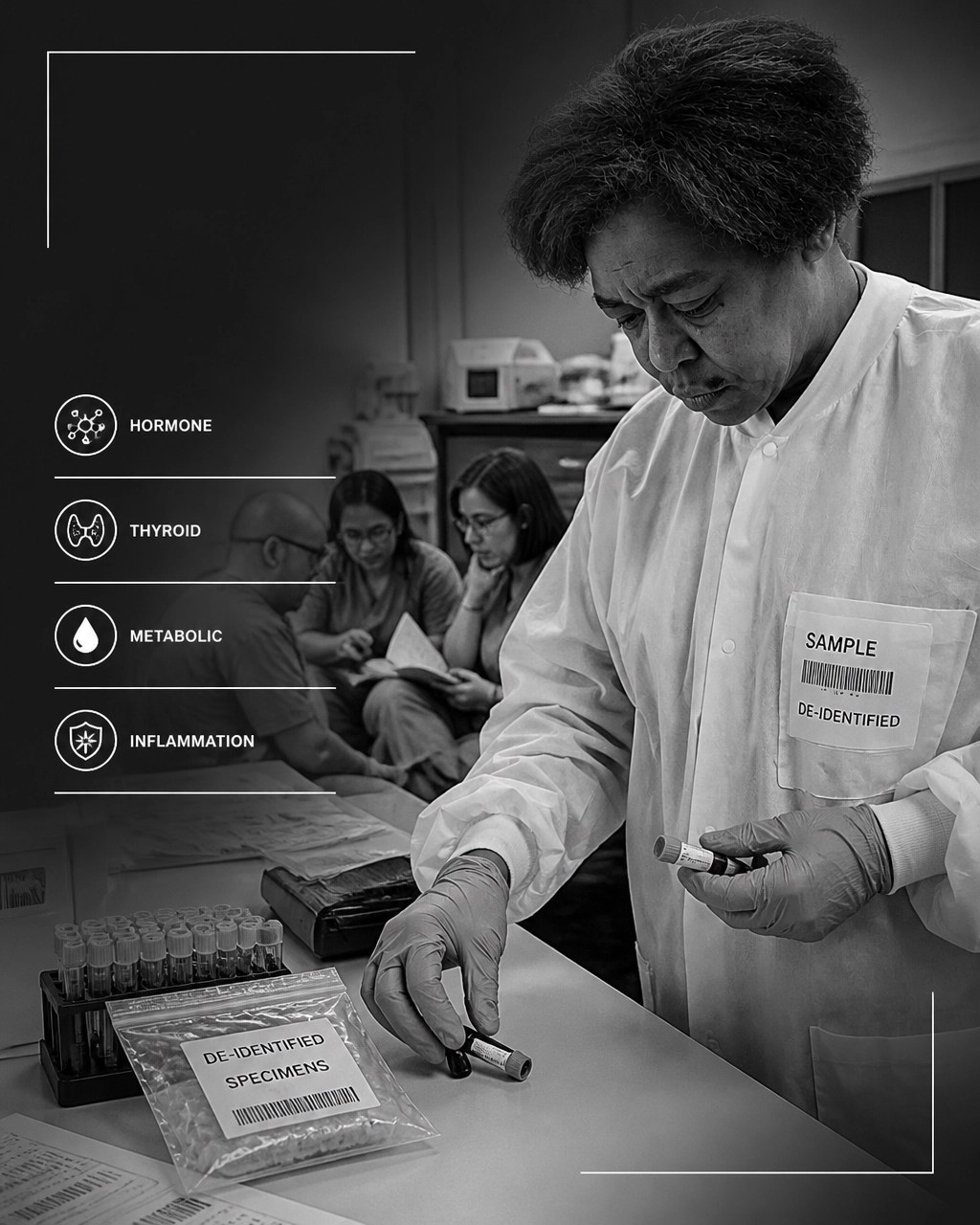
CTA image: The next step is not guesswork. It is a documented baseline, reviewed with appropriate clinical context, followed by an informed conversation.
To begin the conversation, DM BASELINE or text BASELINE to 508-377-3121.
Visit Body Symmetry MD Boston for consultation information and current services.
#FirstResponderWellness #FirefighterHealth #TacticalPerformance #MarlboroughMA #BostonHealth #ReproductiveHealth #OccupationalHealth #HormoneOptimization #MedicalWellnessClinic
Symmetry Restored. Legacy Secured.
Otto Medina
Patient Care Coordinator | First Responders Liaison
Beyond The Call Health & Wellness × Body Symmetry MD
Educational information only; not medical advice. Qualified professionals must interpret results.
Leave a Reply